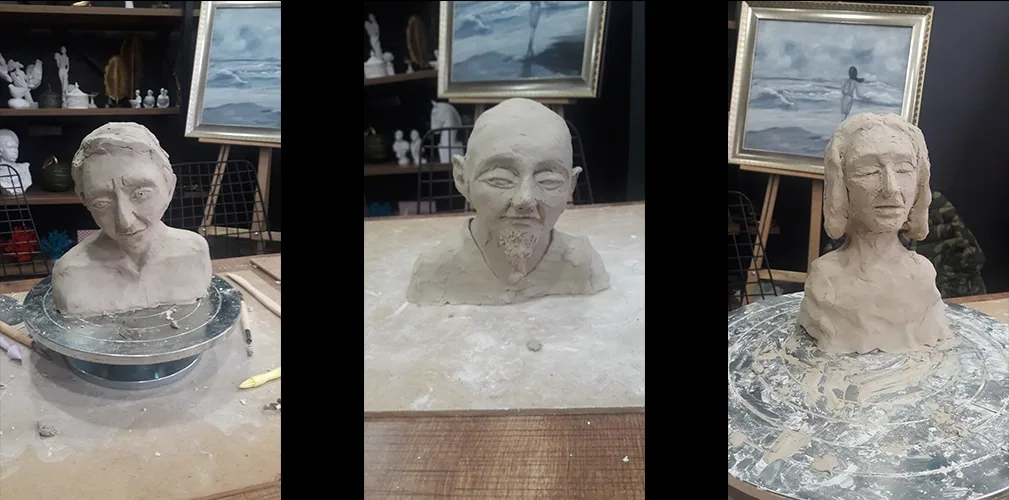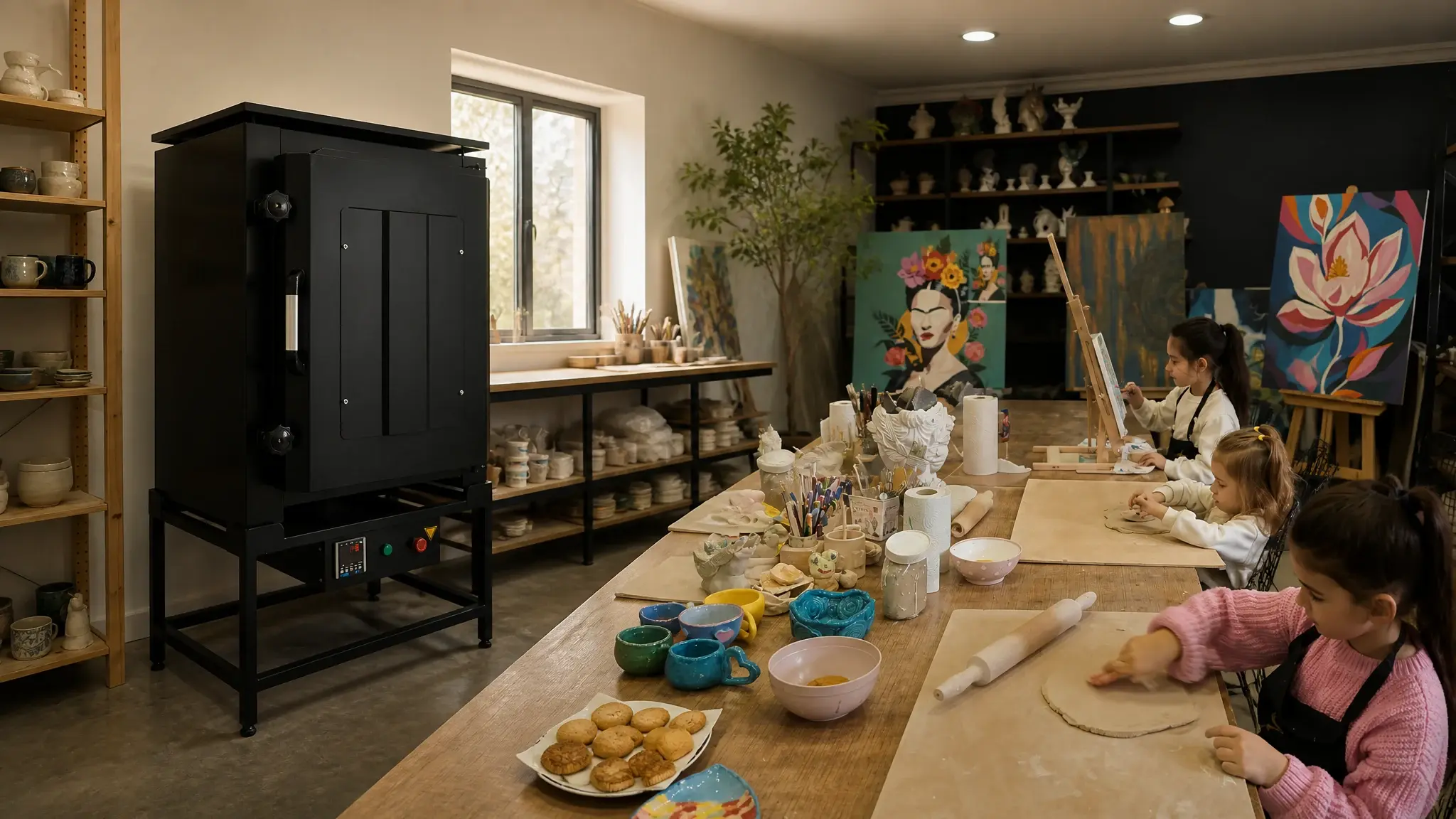
A ceramic piece you've shaped by hand is still fragile and far from permanent when it leaves your hands. For it to become a water-resistant piece suited to everyday use, every piece goes through two separate firings in the kiln: first a bisque firing, and after glazing, a glaze firing.
What is bisque firing?
The shaped piece is first left to dry completely — if any moisture remains in the clay when it goes into the kiln, the piece can crack or even explode. Once dry, the piece goes through its first firing at around 900–980°C. After this stage, the clay has hardened irreversibly, but it's still porous; it can now be painted and glazed, though it's not yet water-resistant.
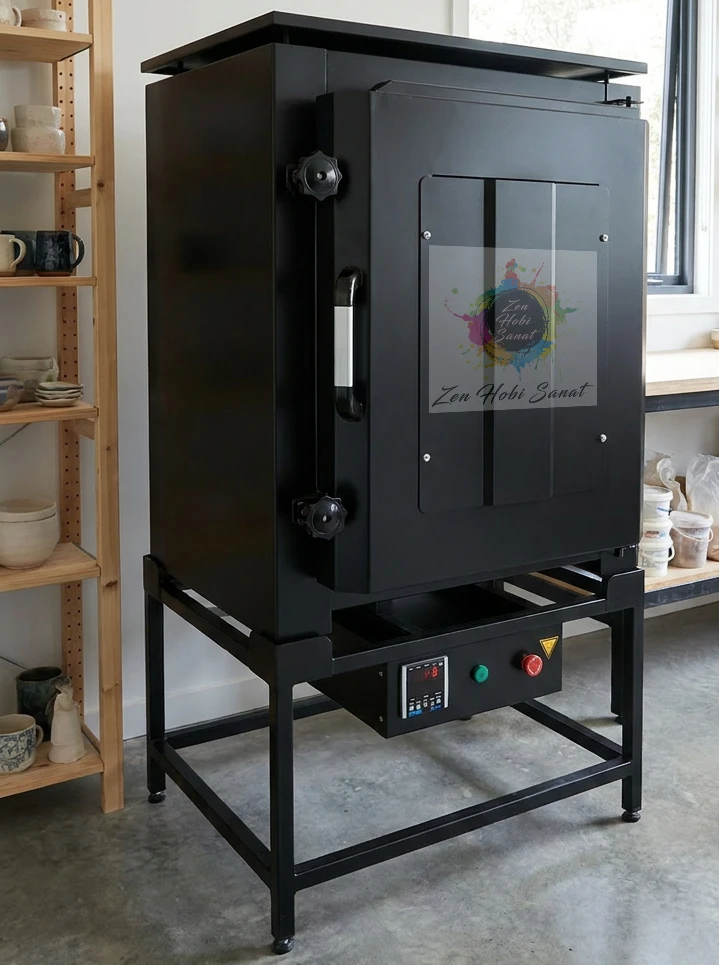
What is glaze firing?
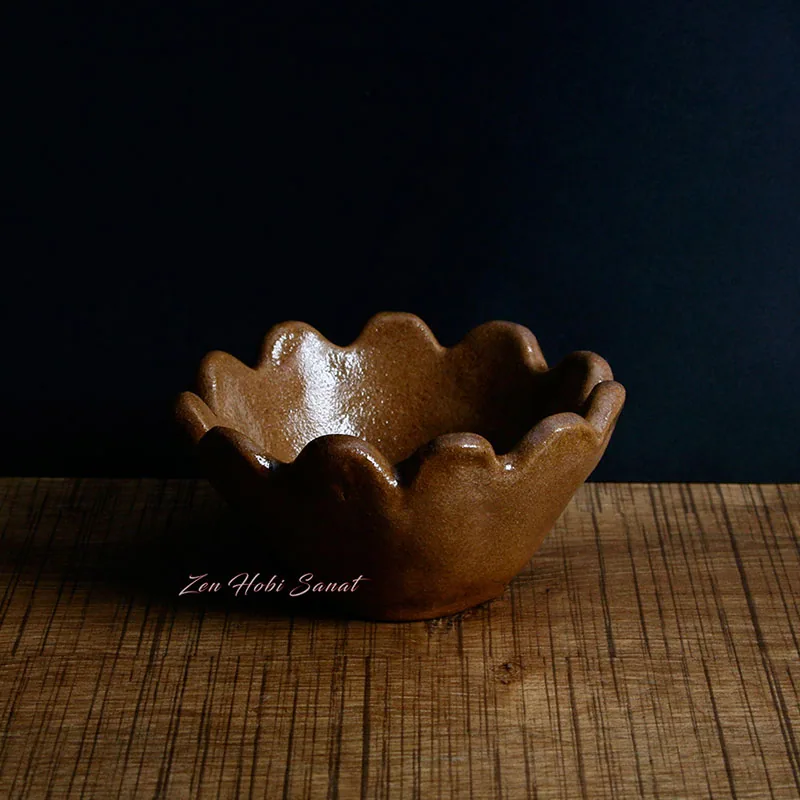
The piece that comes out of bisque firing is glazed — glaze is a special mixture that gives both color and a glassy, water-resistant surface. The glazed piece is fired a second time, this time at around 1000–1060°C. At this high temperature, the glaze melts and turns into a smooth, permanent, glass-like surface. The exact temperature is adjusted depending on the clay and glaze used.
How long does firing take?
Heating the kiln, firing, and especially the slow cooldown required for safety all take hours; the kiln isn't opened until it's fully cooled. The whole process, from drying through to glaze firing, usually takes 2–3 weeks. This two-stage process, completed entirely in our own kiln, is included with every piece you make at the studio.