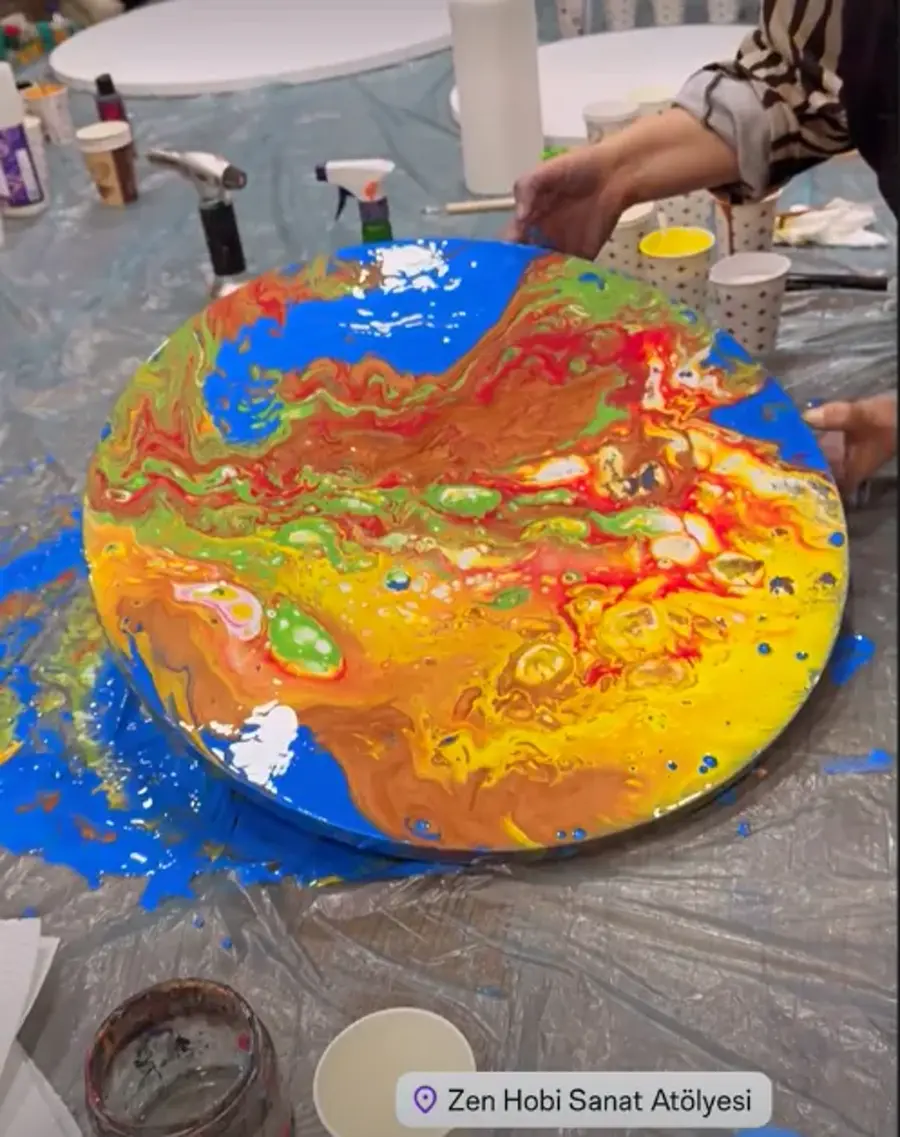
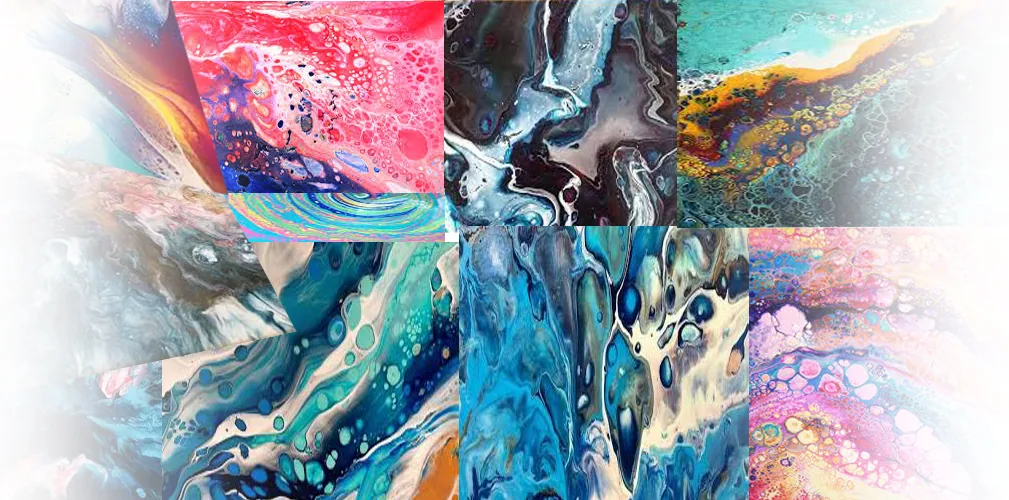
Pouring art (fluid acrylic art) is a modern, brush-free technique in which paint is poured onto canvas in a controlled way. As the colors flow into one another, they form marbled patterns, cells and unexpected transitions — and the result is different every single time.
Why is it so loved?
The biggest reason is that it's accessible: you don't need to know how to draw. Simply choosing your colors and guiding the flow already produces a satisfying result. And letting part of the process go to the paint's own natural movement is a genuinely relaxing experience — one that teaches you to let go of control.
How is pouring art made? Step by step
The process starts with bringing acrylic paint to the right consistency using a liquid called "pouring medium" — the paint should be neither too thick nor too runny, flowing smoothly across the canvas while still staying controllable. Once your color palette is set, it's time for the pour: the paints are first prepared in separate cups, then poured onto the canvas or onto an object placed over the canvas (as in the cup-flip technique). Tilting and turning the canvas lets the paints flow into one another, spread to the edges and drip away the excess. Drying can take a few days depending on the thickness of the piece, so you'll take your finished work home either once it's fully dry or by carrying it gently from the studio.
Popular pouring techniques
Dirty pour: Different colors are layered on top of one another in a single cup, then that mixture is poured onto the canvas all at once; the colors stay separated in distinct layers even inside the cup, and once poured onto the canvas, unexpected patterns emerge.
Flip cup: Paints are layered inside a cup, the cup is turned upside down onto the canvas and then lifted away; as the paint spreads under its own weight, natural cells and rings form.
Swipe: A palette knife or paper towel is gently dragged across layers of paint already poured onto the canvas; this motion pulls the colors into one another, creating soft transitions and texture.
What to expect at the studio
A session usually runs 1.5–2 hours; all the materials — fluid paint, canvas and apron included — are ready and waiting for you at the studio, so all you have to do is show up. Your instructor will guide you through getting the acrylic paint to the right consistency, choosing your color palette, and trying out the pouring techniques above. Once it's dry, you can take your painting home, and varnish it yourself if you'd like to make it permanent.
Want to walk away with a piece you can hang on your wall after just a single session? Pouring art is the perfect place to start — you're also welcome to join as a one-off workshop.