Mosaic is the art of bringing together small pieces of glass or ceramic — known as tesserae — to build a pattern or image. It's a craft thousands of years old, used from ancient Rome to Byzantium, and it's still practiced with just as much enjoyment today.
How is mosaic made?
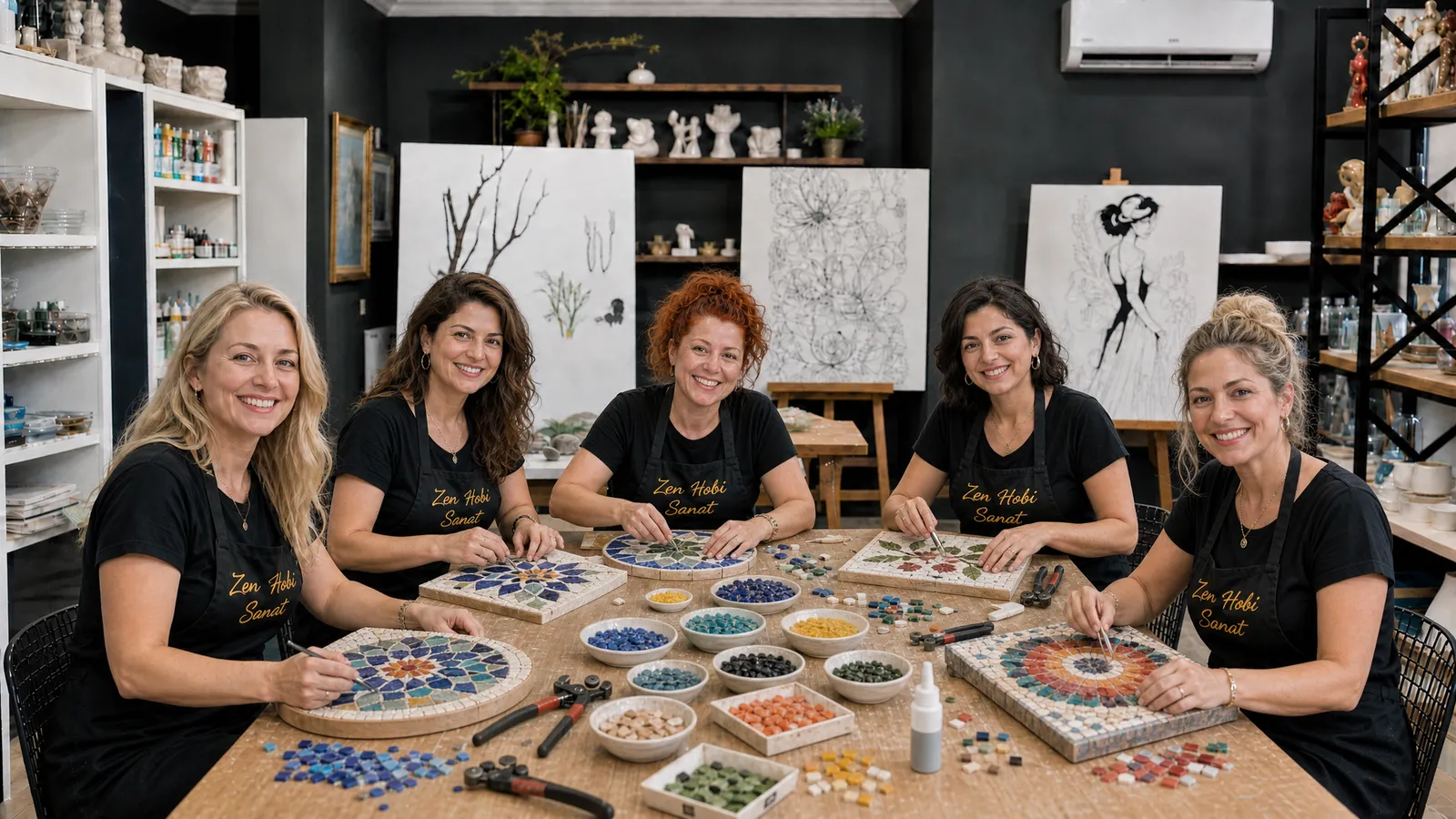
The process starts with cutting colorful glass and ceramic pieces to the desired size and shape with a special nipper. The pieces are placed one by one onto a base with special adhesive, following a pattern sketched beforehand or designed on the fly. The gaps between pieces can be left open or filled with grout — a choice that shapes the final look of the piece. The angle at which pieces sit, and the space between them, also affects how light plays across the finished work.
What patterns can you create?
You can pick from ready-made patterns or design your own motif; geometric patterns, floral motifs or fully abstract compositions all suit mosaic work. The color palette is entirely up to you.
Who can take part, and how long does it take?
No prior experience is needed; cutting and placing techniques are taught step by step alongside an instructor. It's usually completed in a single session; the exact duration depends on the size and detail of the chosen pattern. What you end up with is an original piece — perfect as a tabletop ornament or a wall panel.