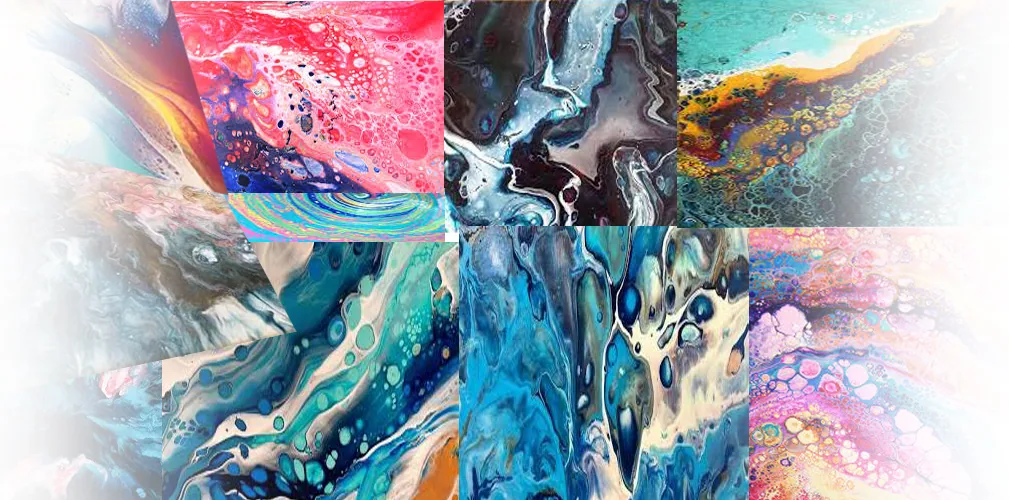
Textured painting is a three-dimensional painting technique where a raised, relief-like effect is built onto canvas using a palette knife and dimensional materials. A flat canvas surface becomes, through this technique, a genuine relief — something you can actually feel with your hand.
How is textured painting made?
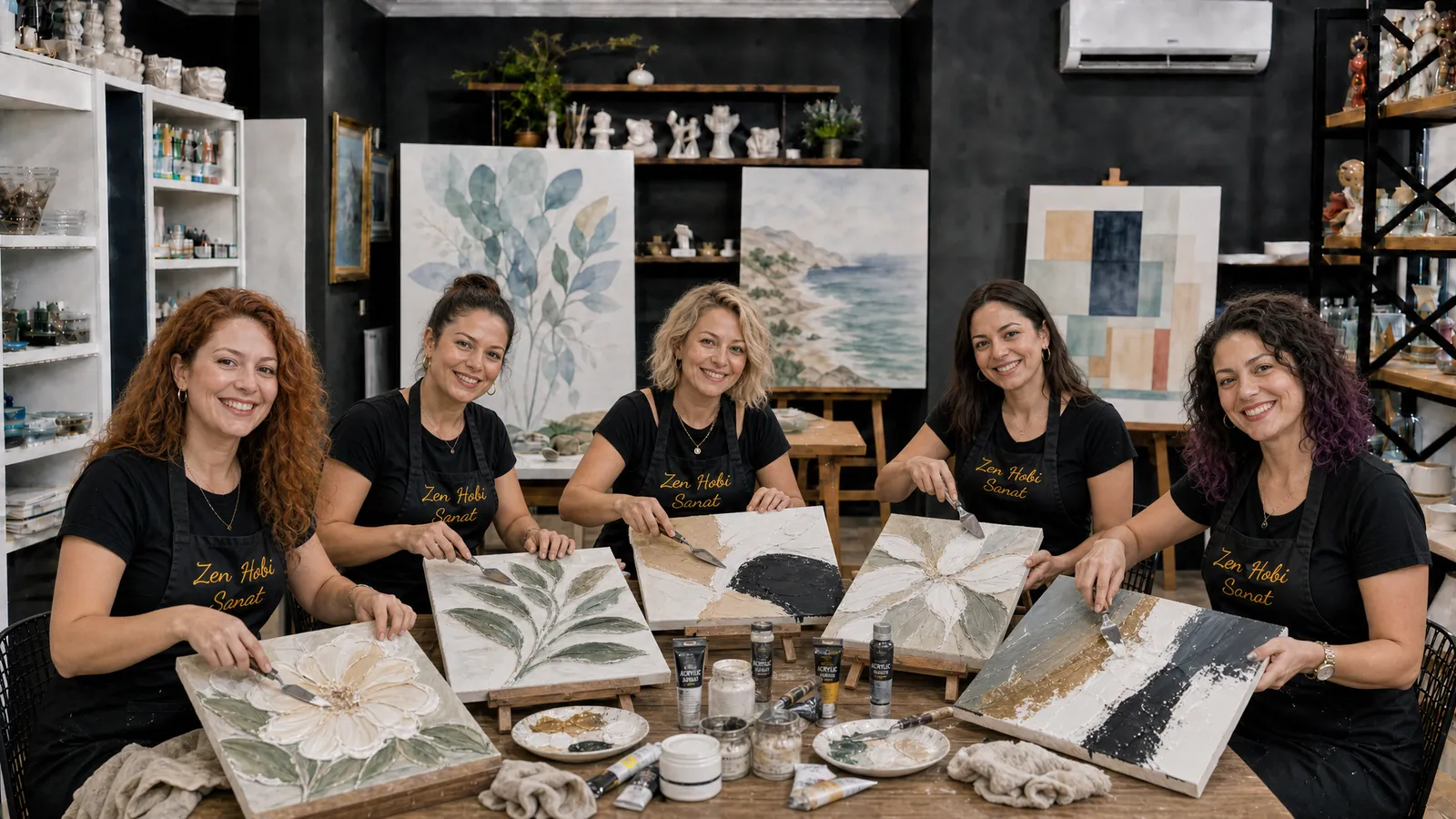
The process starts with applying a dimensional paste or plaster-based material, mixed with acrylic paint, onto the canvas with a palette knife. The angle, pressure and direction of the knife create different texture effects — sharp ridges, soft waves, thick layers. The material is shaped while still wet; once it dries, additional layers of color or detail can be added on top.
What compositions can you create?
You can choose a flower, a leaf or an abstract pattern, or work out your own composition with an instructor. Floral and leaf motifs show off the relief technique's natural volume particularly well, while in abstract work, texture itself becomes the main subject.
Do you need experience, and how long does it take?
No, no prior experience is needed; the palette knife technique and the steps for building texture are taught alongside an instructor. It's usually completed in a single session; the exact duration depends on the size and detail of the chosen composition. What you end up with is an original, three-dimensional painting ready to hang on a wall.